
SIGNALS & SYSTEMS
Labs
- Machine Learning for Communications, Multi-agent Reinforcement Learning, Meta-learning
- Coded Distributed Computing, Wireless Caching Networks
- Statistical signal processing, Markov Chain Monte Carlo Detection
- Coding Theory, Iterative Decoding
- Underwater Acoustic Communication.
- Machine Learning for Medical Imaging, MRI Image Reconstruction

We are conducting research in the general areas of Massive MIMO, Ultra Reliable Low Latency Communications (URLLC), Filterbank Multicarrier Communications (FBMC), and High Frequency (HF) Communications.

Our research seeks to augment biological neural networks with artificial neural networks and bionic devices to treat neurological disorders and to further our understanding of neural processing. Working at the intersection of artificial intelligence, robotics, and neuroscience, we are developing biologically-inspired artificial intelligence and brain-machine interfaces to restore and/or enhance human function.

The Sensing, People, and Networks (SPAN) Lab conducts research on two topics: wireless networking, and the equity of engineered and automated sensing and decision systems. We have a history of augmenting the reliability, efficiency, and capabilities of networks using the radio as a sensing interface in addition to the communication interface. We also investigate how sensing and other “big data” systems and algorithms that affect the resources people are allocated can have both positive and negative effects on equity in society. Students in the SPAN Lab study wireless networking, statistical signal processing, and power and inequity, and these tools enable us to study the interaction of people, networks, and sensing systems in new ways that will lead to greater privacy, reliability, and equity of engineered systems.

We also actively aim to contribute to fundamental machine learning research on topics such as semi-supervised learning, domain adaptation and interpretable machine learning. A partial list of project descriptions can be found here . Our vision is to overcome the barriers of scarcity of annotated data and the lack of interpretability of AI models to facilitate their ubiquitous adoption in interdisciplinary research and every day life.
Faculty

Rong Rong Chen
Associate Professor
- Phone: 801-585-7367
- Email: rchen@ece.utah.edu
- Office: MEB 3106
Signal processing and communication systems: efficient utilization of multiple antennas for high-rate communications in wireless networks, statistical detection methods for underwater acoustic communications, and other fields related to communication systems and statistical signal processing.
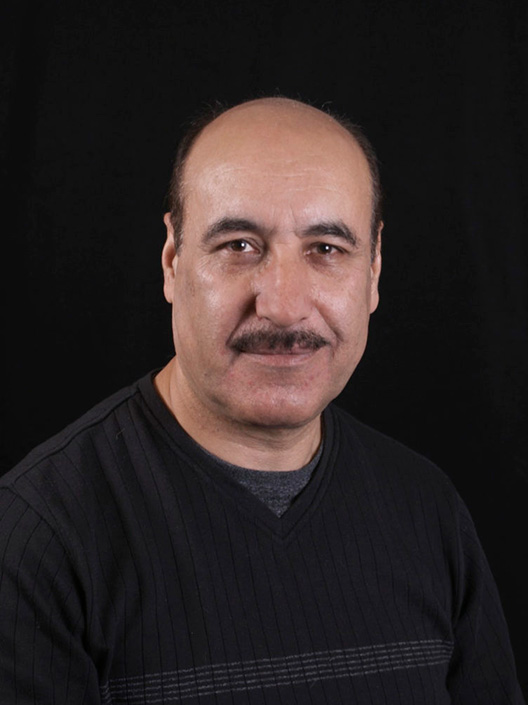
Behrouz Farhang
Professor
- Phone: 801-587-7959
- Email: farhang@ece.utah.edu
- Office: MEB 3240
Filter bank multicarrier communications for underwater acoustic channels, cognitive radios, and multiple access networks; detection algorithms for MIMO and OFDM; implementations on hardware platforms.
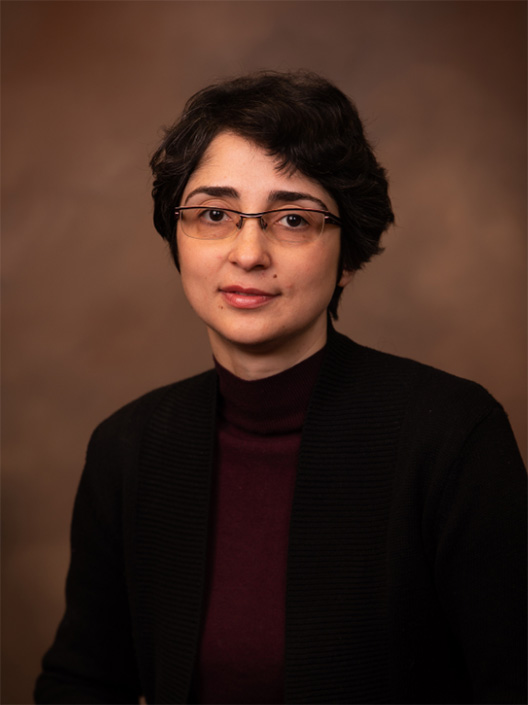
Neda Nategh
Associate Professor
- Phone: 801-213-3675
- Email: neda.nategh@utah.edu
- Office: MEB 2220
Visual computation and computational vision: Research in our lab employs an interdisciplinary approach to understand the real-time, robust, and efficient visual computations performed by our natural vision and to translate this knowledge into computational vision frameworks for machine vision applications, artificial vision solutions, and imaging systems.
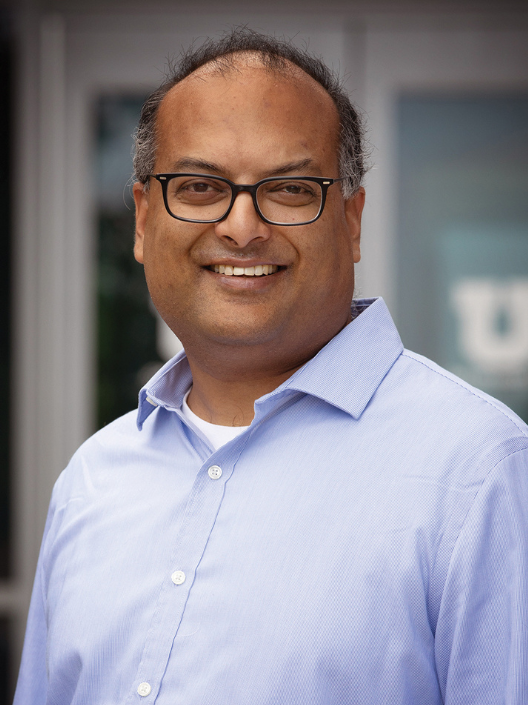
Neal Patwari
Professor
- Phone: 801-581-8282
- Email: neal.patwari@utah.edu
- Office: MEB 2126
- Website: https://patwarilab.com/
Wireless technologies which improve the security, reliability, and sensing capabilities of future generation networks; and equitable design of automated/AI decision systems.
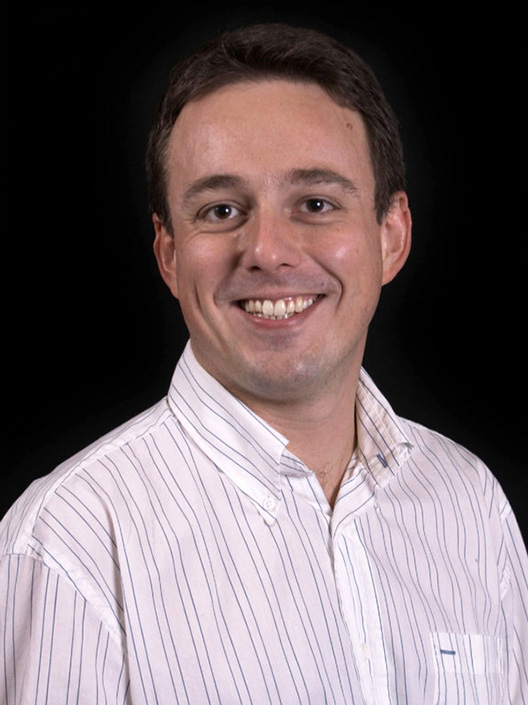
Tolga Tasdizen
Associate Chair, USTAR Professor
- Phone: 801-581-3539
- Email: tasdizen@ece.utah.edu
- Office: WEB 4893
Image processing and pattern recognition, specifically: geometry-based and statistics-based methods for image filtering, segmentation and feature extraction using high-order partial differential equations for image and surface reconstruction; applying these methods to problems in biomedical imaging, particularly neural circuit reconstruction from very large-scale microscopy image datasets